
It does its best work in the weather everyone else complains about.
Bioswale · Alamo Heights
§Work · Plate III
Dry-creek bioswales that drink tens of thousands of gallons a year (modeled) and grow food out of what used to be the runoff. Drainage rebuilt as habitat — and a grocery line nobody has to pay twice for.
It does its best work in the weather everyone else complains about.
Bioswale · Alamo Heights
The read
The site had the affliction most lots share and few admit to: in a storm the water sheeted off in a hurry, took the soil along as a souvenir, and then the ground went bone-dry by August, righteously offended. The land was telling us, in plain language, exactly where it wanted to move water. The work was to listen — to slow it, sink it, and put it to use, rather than wrestle it to the curb and call that a victory.
Before · after
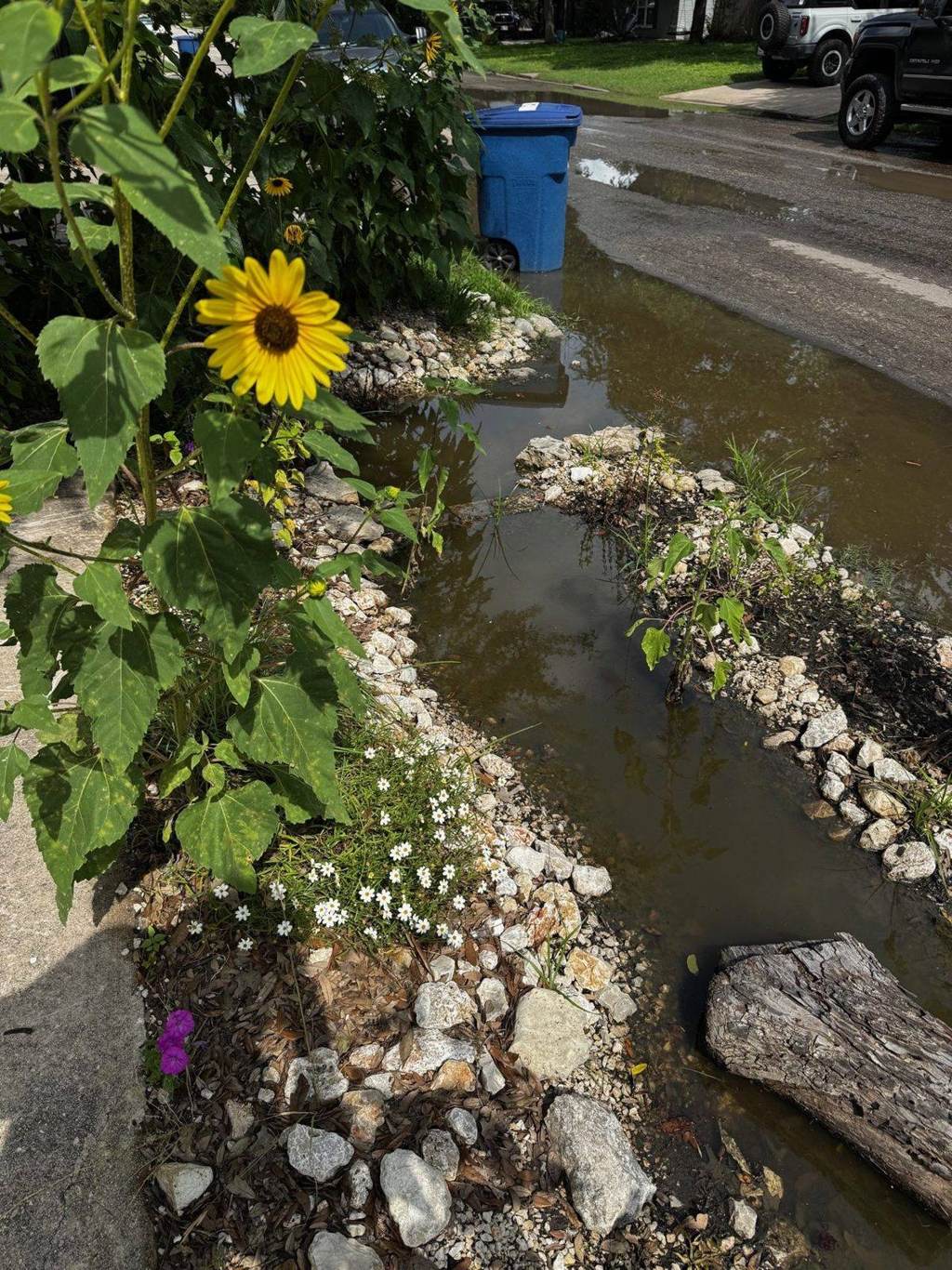
The street used to keep the storm — sheeting down the gutter, ponding at the curb, gone by August. Now the ground keeps it, and grows something on it.

What we built
Dry-creek bioswales — limestone-lined channels that catch and hold stormwater, absorbing tens of thousands of gallons a year (modeled) and persuading it to soak in rather than run off to be somebody else's flood. Then we planted the line in native edibles: persimmon, prickly pear, agave, muhly. The drainage doesn't merely manage water; it sets a table.
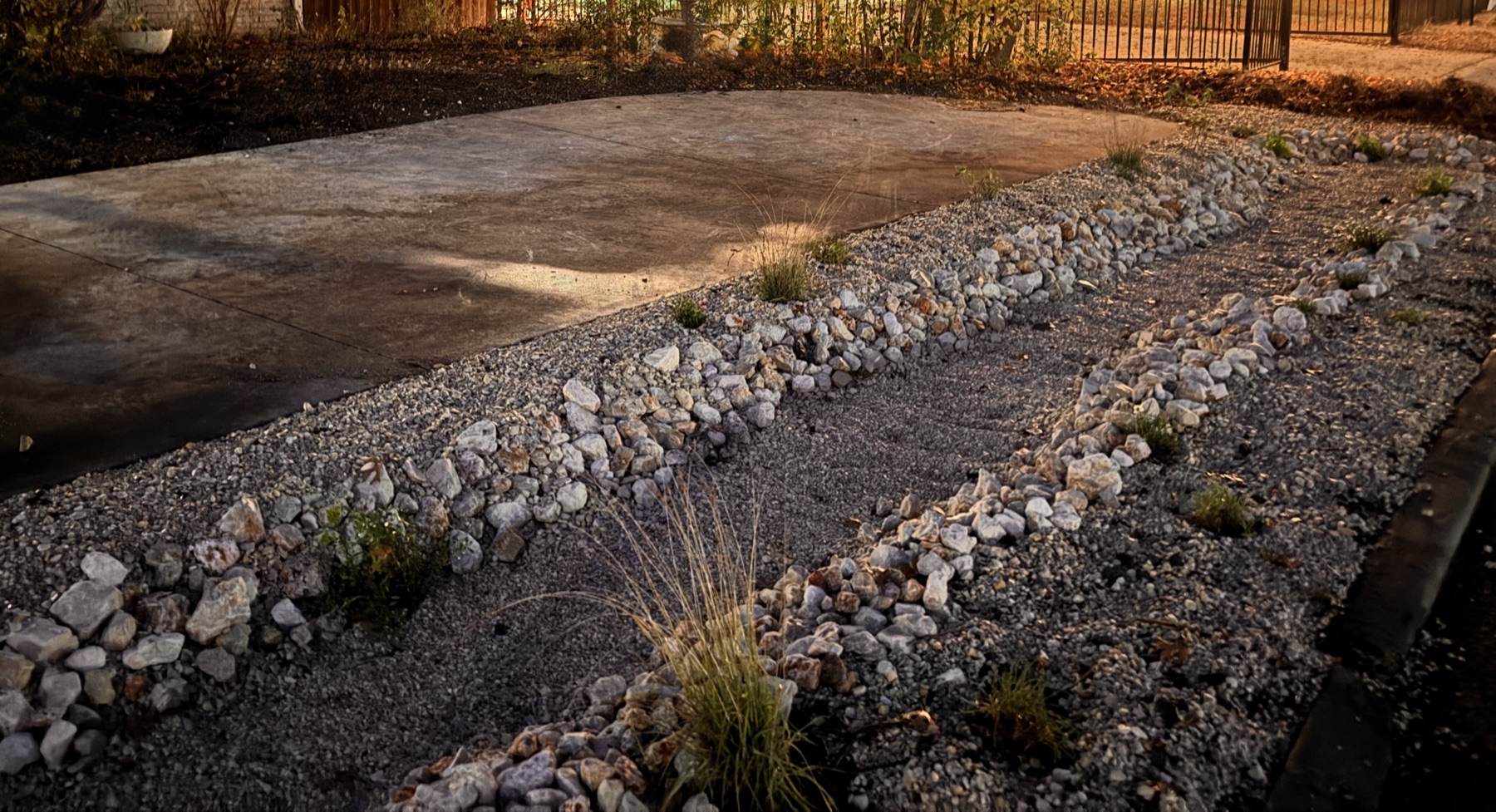
Limestone-lined, planted, and waiting on weather.
The dry-creek channel · Alamo Heights
What it does
Water: tens of thousands of gallons a year (modeled) kept on site instead of exported downstream as someone else's emergency — recharge, not runoff. Habitat: a planted channel is a corridor, and pollinators and birds rarely turn down a good corridor. Food & body: native edibles draw people into the landscape to harvest — the Movement dimension of the Score, where a place you forage in quietly outperforms a place you merely admire.
From this work
Everything here is built to travel — quote it, book it, follow the threads.
Pull quote
"Held where it falls, stormwater is the cheapest irrigation you'll ever own — and the start of a food line. The storm drain never wanted it anyway."
Talk about this
Interview / podcast topic — why water reveals how a place thinks, and how drainage becomes habitat and food.
Booking & topics →The lesson
Stormwater is only a problem the moment you decide to send it away. Held where it falls, it's the cheapest irrigation going, the start of a food line, and a habitat besides — all of it conjured from the very thing the neighbors were paying good money to be rid of.
More work