Built for people who arrived with nothing, and handed living water.
Towne Twin Village · San Antonio
§Work · Plate II
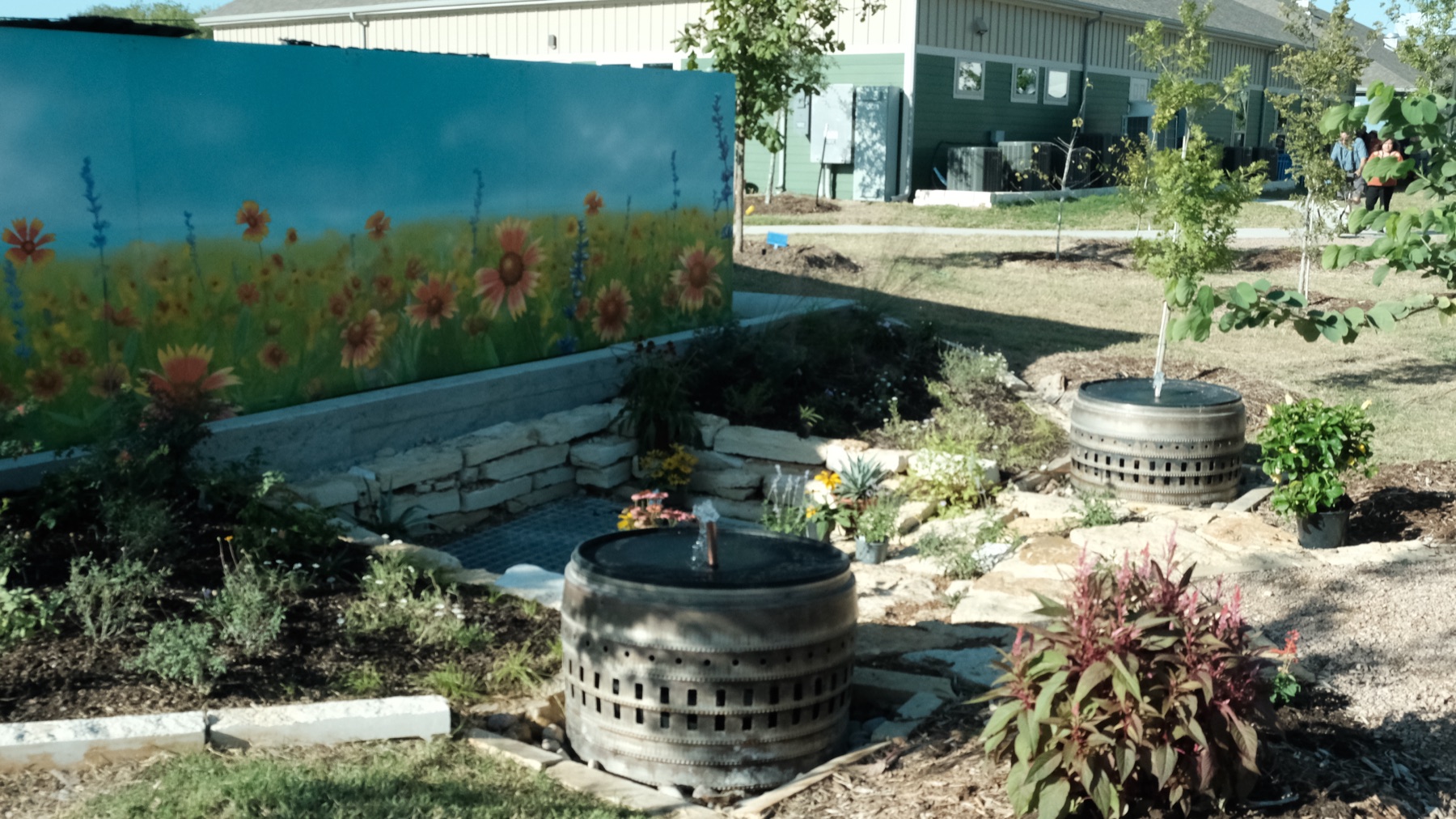
A closed-loop water system, built pro bono, for San Antonio's village for formerly-homeless seniors. Three fountains that reclaim water, clean it through biochar and lime, and move it through native habitat — the whole loop, fountains and filtration both, run by a single 100-watt off-grid solar system, which is to say by the sun and nobody's invoice. A place built for people who arrived with nothing, handed living water at its center. You may file that under sentiment. I file it under what the place was owed.
Built for people who arrived with nothing, and handed living water.
Towne Twin Village · San Antonio
The read
Towne Twin Village is permanent supportive housing — tiny homes and apartments for seniors who spent years on the street. The cruel arithmetic of the thing is that the people who most need a place to feel calm, alive, and held are precisely the people the world arranges never to get one.
Moving water is the shortest distance between a hard piece of ground and somewhere a body actually wants to stand. The work was to give the village that — and to do it so the water pays its own way rather than quietly bleeding a budget that has better things to do.
What we built
Three fountains, connected by aqueducts and set into a limestone-edged bioswale planted with natives. The system reclaims water, cleans it through biochar and lime, and recirculates it — a closed loop that keeps and returns its own water rather than helping itself to the tap. The entire system, all three fountains and the filtration, runs on a single 100-watt off-grid solar setup: no grid tie, no meter, no utility bill arriving each month to remind anyone the beauty was conditional. Built largely by hand over roughly 200 donated hours, in partnership with Housing First Community Coalition.
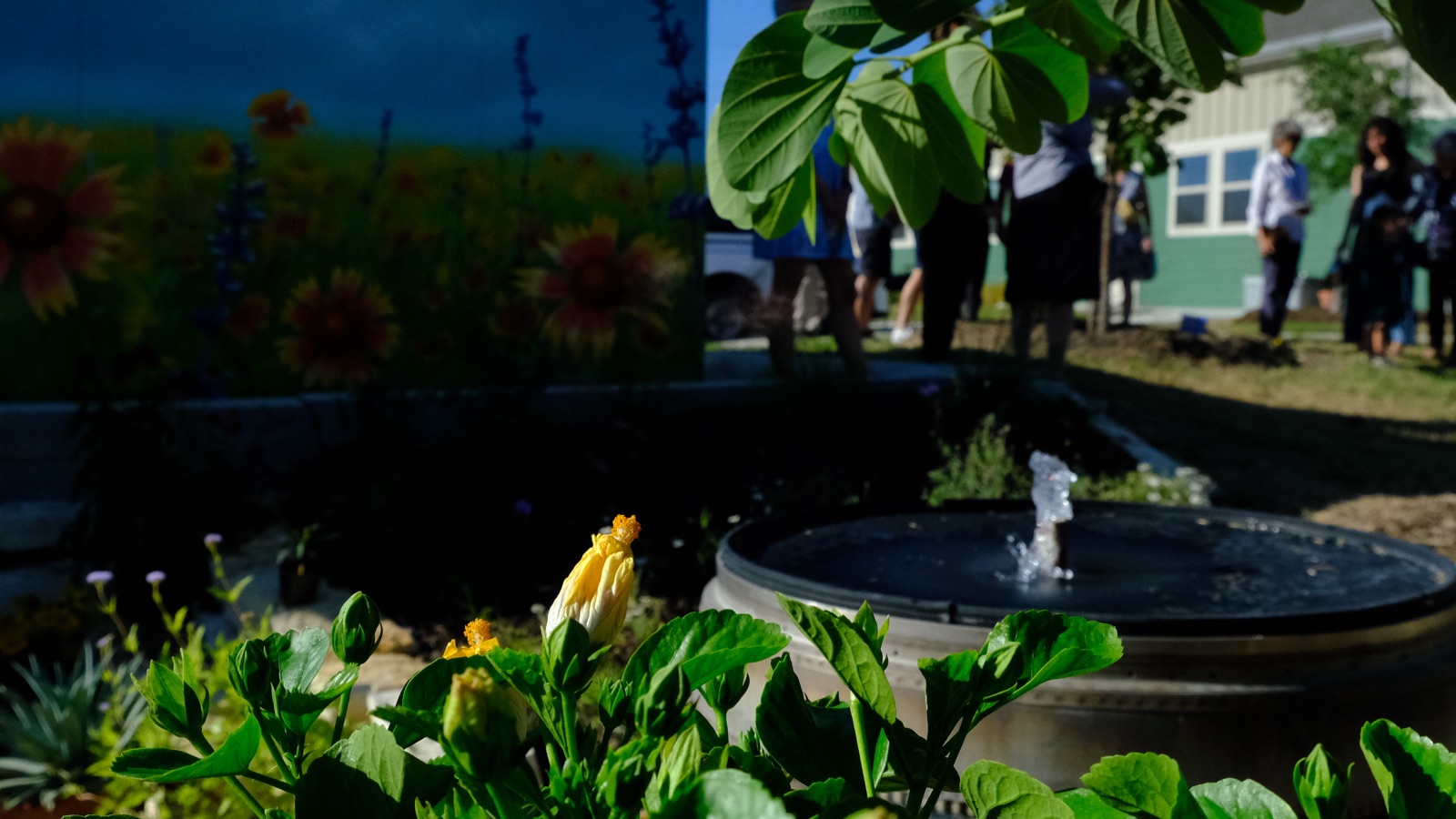
Reclaimed, cleaned, returned — then asked to do it again.
A closed loop, not a tap
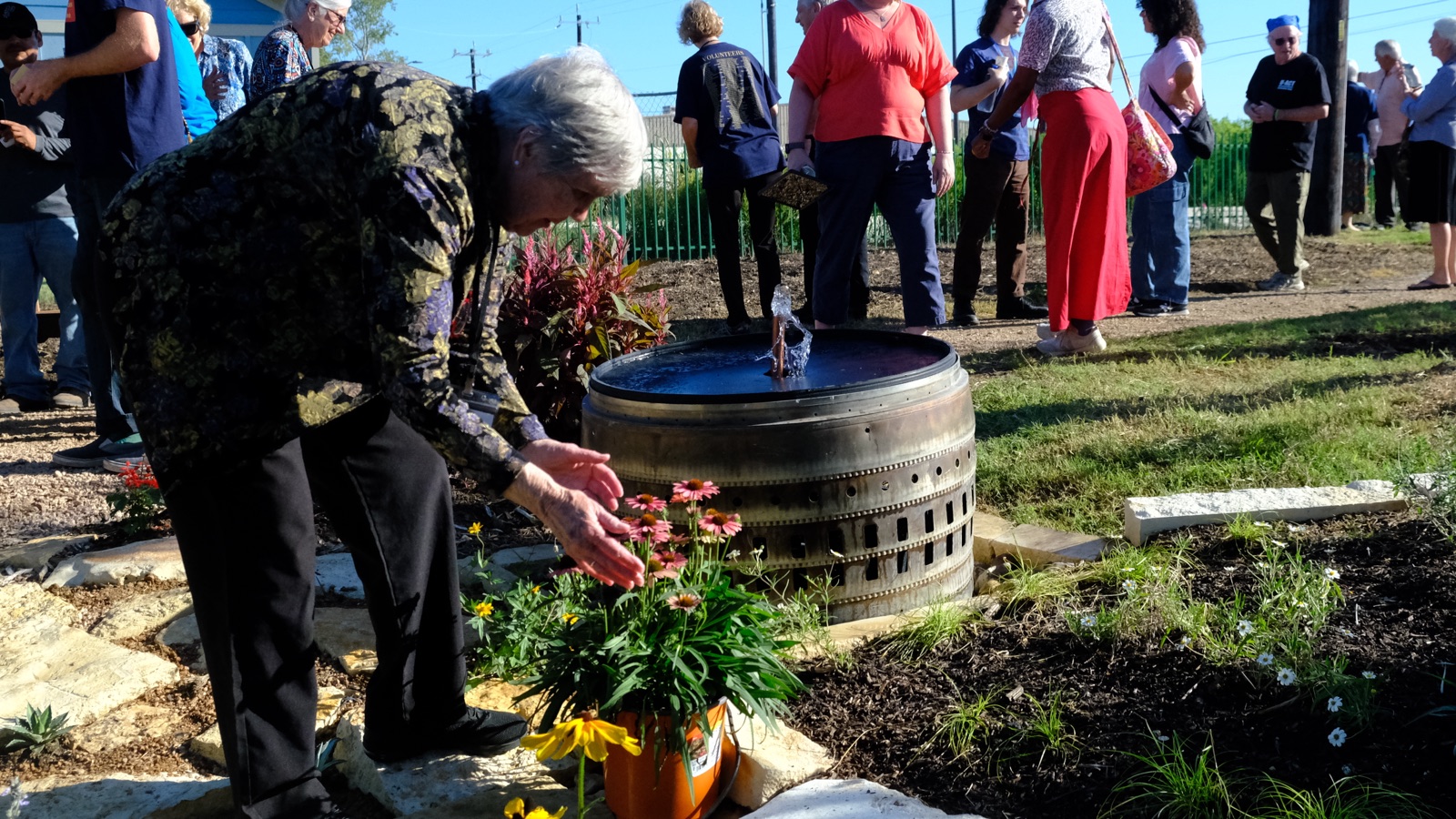
Built for the people who gather around it.
Dedication day · Towne Twin Village
What it does
Moving water and living habitat are among the oldest dimensions of the Sensory Environment Score — the conditions a body reads as safe before the mind catches up.
Water you can hear. Native plants that bring pollinators and shade. A bioswale that turns a storm into habitat instead of runoff the storm drain never asked for. For people rebuilding the idea of home from the studs, none of this is decoration — it's the whole difference between grounds you pass through and grounds that are, at last, yours.
The lesson
Build living water into a place for formerly-homeless elders and the whole premise answers itself without being asked twice: sensory restoration is not a luxury, it's infrastructure — and infrastructure should reach the people furthest from it first, not last, and not never.