§Work · Plate I
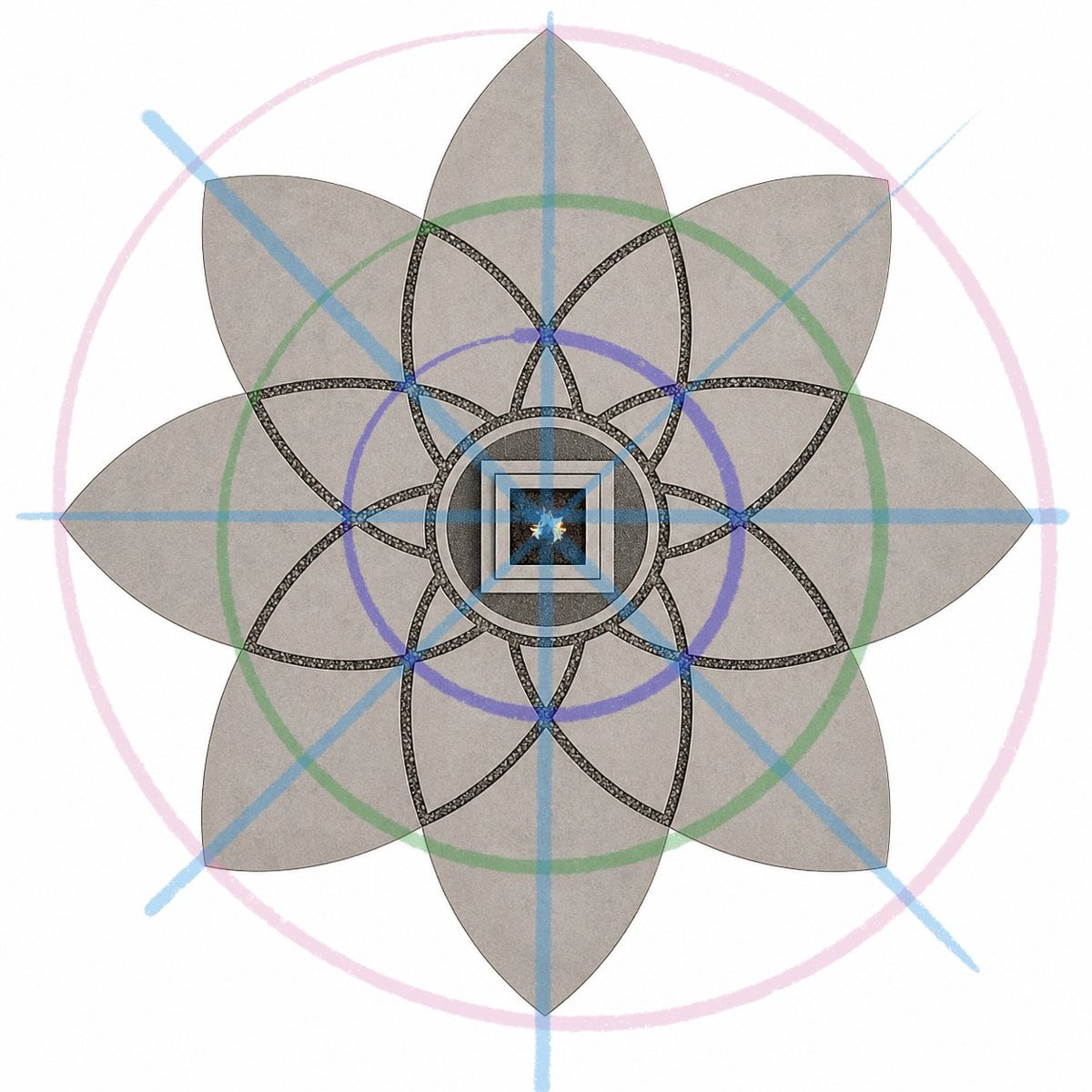
A cast-concrete lotus landmark — raised, leveled, and surrounded by bioswales. The form was arrived at three ways at once, none of them willing to defer: Eastern geometry, Western mathematics, Latin intuition. Function, doing the work; sculpture, taking the credit.
Function, going about its day dressed as beauty.
The concrete lotus · Texas
The read
A lotus is a geometry problem before it has the decency to become a sculpture — a flower that climbs out of water and mud into a shape with genuine order in it, which is more than most things manage. The work was to give that order a permanent form, and to set it where the ground around it carries its own rain instead of shrugging it off toward the curb.
The form was settled three ways at once: the proportional geometry of the East, the precision of Western mathematics, and plain intuition — the kind learned young, in markets where nobody asks a melon for its credentials. Each one audited the others until all three agreed on the same shape. They did, eventually. The shape was never going to be the one to compromise.
What we built
A 28-foot concrete landmark, raised and leveled, surrounded by bioswales that catch and slow stormwater. The whole piece was cast in delicately layered, sealed birch formwork — assembled off site to exact specifications, with no room for error, which is a polite way of saying there was exactly one chance — and only then poured on location.
Freeing the concrete without scarring it is its own quiet discipline, and the one nobody photographs. The birch forms were wetted before the pour so the wood would contract as everything dried and let the casting go cleanly, then struck away by hand with rubber mallets, gently, the way you'd wake someone you actually liked — so the concrete never got the chance to grip the wood. The thing people stop for and the thing that holds the water are, in the end, the same footprint.
The build
Assembled off site, set on location, cast in a single pour — then freed from the birch by hand.


What it does
Water, and the pull of a landmark you orient toward, are among the oldest dimensions of the Sensorial Performance Score — conditions a body reads before the mind catches up.
A 28-foot form gives a place a center, which most places are quietly missing and won't admit. The bioswales do the unglamorous work below: they turn runoff into habitat, so a hard edge of a site becomes ground that's alive. A landmark above, water handled below — one footprint, two jobs, no argument about which mattered more.
From this work
Everything here is built to travel — quote it, book it, follow the threads.
Pull quote
"Make the thing people stop for the same thing that holds the water, and the choice between beauty and function quietly stops being yours to make."
Talk about this
Interview / podcast topic — beauty as infrastructure: casting a 28-foot concrete landmark in birch, and the bioswales that make it earn its footprint.
Booking & topics →The lesson
Build the landmark as the ecological work and the old quarrel between the two simply evaporates — there was never much to it. The same principle scales from one concrete lotus and its bioswales to a whole watershed, which is, conveniently, exactly where the rest of the practice is headed.
More work